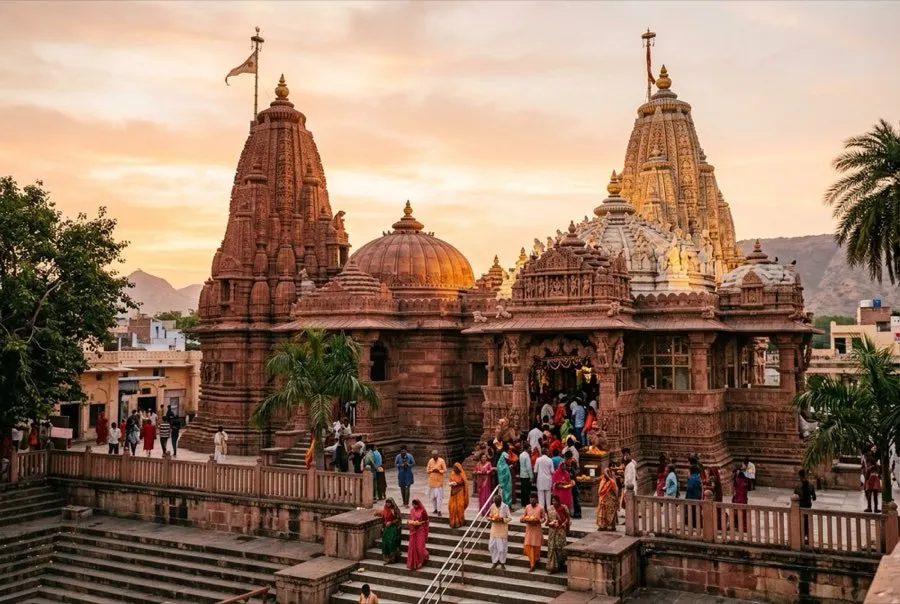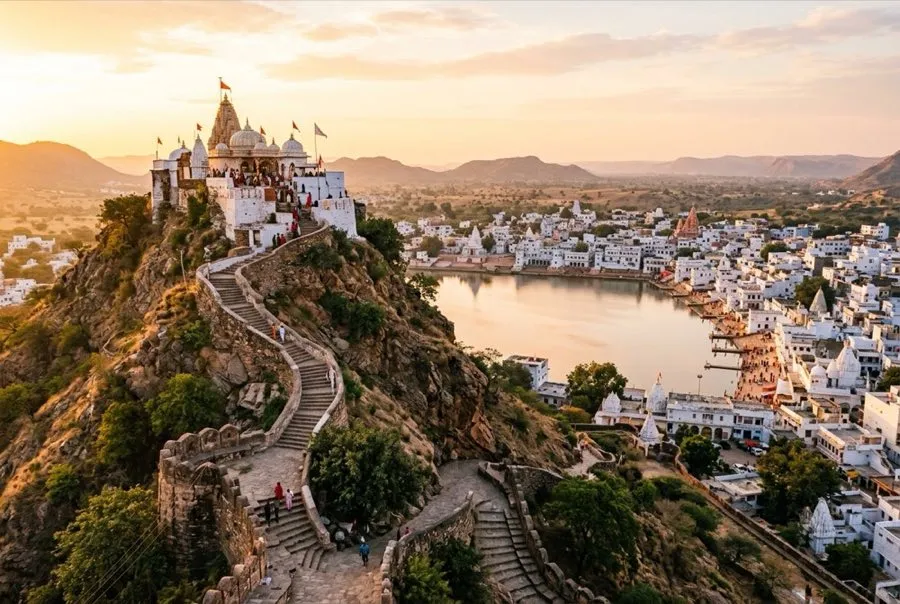
The Sacred Encirclement
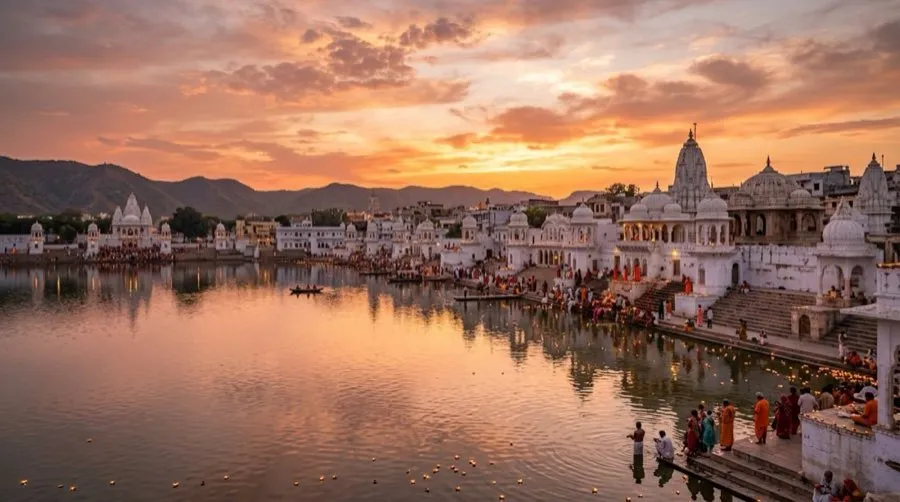
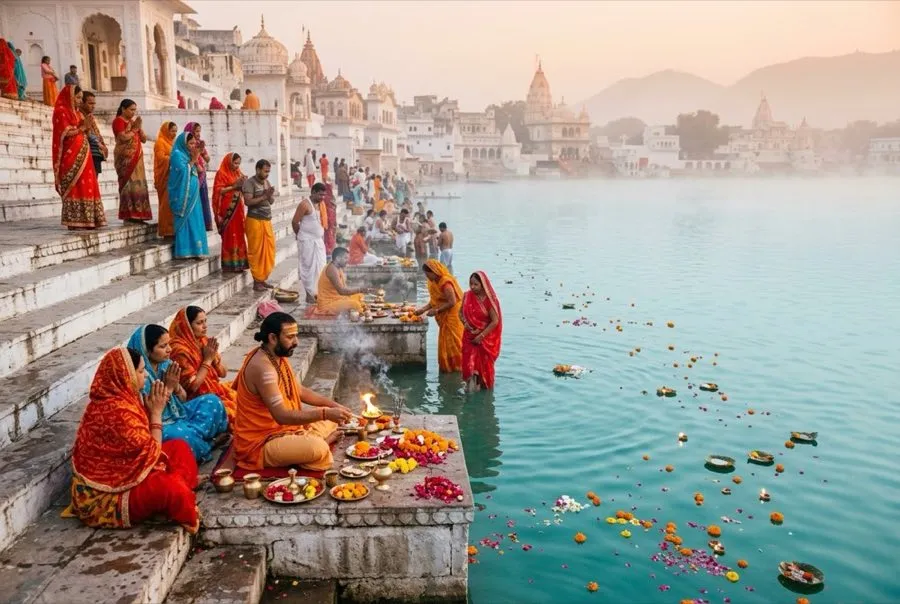
Pushkar Lake is encircled by 52 bathing ghats — stepped embankments leading down to the holy water. Pilgrims have performed ritual baths (snan) here for over 2,000 years, believing a dip in the sacred waters washes away past sins and grants moksha (liberation).
Each ghat carries the name of a ruler, saint, or deity who built or consecrated it — creating a living testament to centuries of royal patronage and devotion.
Photography of rituals and devotees is restricted or prohibited at several ghats. Always look for signage and respect the wishes of worshippers. Photography during the aarti ceremony is generally not allowed.
The Most Sacred Ghats
1. Brahma Ghat — The Central Ghat
This is the most revered ghat in Pushkar, said to be the spot where Lord Brahma himself performed a yagna (fire sacrifice) to create the lake. A golden-spired shrine marks the location. Pilgrims take the ritual Pushkar Snan bath here first.
Best for: Evening aarti (6:30–7:30 PM) | Photography: Permitted from distance, not during ceremonies.
2. Varaha Ghat
Dedicated to Lord Vishnu's boar avatar (Varaha), this beautifully carved ghat features ornate pillars and a resident priest who performs daily puja. The stone steps are worn smooth by centuries of pilgrims' feet.
3. Koti Tirtha Ghat
One of the largest ghats, constructed with support from Maharajas of Jaipur in the 18th century. It features a wide ceremonial platform used for major religious gatherings during Kartik Poornima.
4. Gau Ghat (Gandhi Ghat)
Originally built by Rajput royalty, Gau Ghat (also called Gandhi Ghat) holds profound national significance. A portion of Mahatma Gandhi's ashes was immersed here in 1948, followed by those of Jawaharlal Nehru and Lal Bahadur Shastri. A marble plaque marks the spot. Today, it is the most important ghat for asthi visarjan — the ritual immersion of cremated remains — drawing families from across India who seek liberation for their departed ancestors. The ghat features a small Ganesha shrine at its head and is maintained jointly by the Rajput and Maratha royal families.
5. Surya Ghat
Dedicated to Surya, the Sun God, this east-facing ghat catches the first light of dawn over Pushkar Lake. It is a favorite among photographers for its unobstructed sunrise views — the sun rising directly over the far ghats, casting long golden shadows across the water. Morning prayers and sun salutations are performed here daily. The evening aarti at Surya Ghat is notably intimate, with fewer crowds than Brahma Ghat, making it a peaceful spot for quiet contemplation and photography (with permission).
Ghat Zones by Activity
Ghats 1–18. Most sacred zone including Brahma, Varaha, and Koti ghats. Active puja ceremonies throughout the day.
Ghats 19–30. Quieter, royal-sponsored ghats — ideal for contemplation and early morning photography (with permission).
Ghats 31–42. More secluded, shaded by ancient trees. Sunrise views from the southern corner are exceptional.
Ghats 43–52. Sunset-facing ghats — the most popular viewpoints for the golden hour. Boat access available seasonally.
Daily Rituals at the Ghats
- Mangala Aarti (5:00–6:00 AM): Pre-sunrise lamp ceremony, performed by temple priests
- Pushkar Snan (Dawn–9:00 AM): Ritual bath by pilgrims, especially devout on auspicious days
- Shraddha Rites (Morning): Ancestral memorial rituals performed by family priests
- Flower Offering (Throughout day): Marigold garlands floated onto the lake surface
- Sandhya Aarti (6:30–7:30 PM): Evening lamp ritual — the most spectacular, with hundreds of diyas (oil lamps) lit simultaneously
Pushkar Bazaar
Pushkar Bazaar is a vibrant market surrounding the holy lake. Famous for its colorful handicrafts, embroidered textiles, leather goods, and the sweet aroma of local roses, it is an essential part of the town's experience.
- Local Handicrafts: Shop for traditional puppets, camel leather bags, silver jewelry, and block-print bedsheets.
- Rose Products: Pushkar is known as the "Rose Garden of Rajasthan." Buy high-quality rose water, gulkand (sweet rose petal preserve), and rose incense.
- Bargaining: Polite bargaining is expected. Start at around 50-60% of the initial quoted price and work your way to a mutual agreement.
Photography Rules
Essential Visitor Tips
- Remove shoes before descending any ghat steps — designated shoe storage is available
- Dress modestly — see dress code guidelines
- Do not enter the lake water unless performing an actual ritual — casual swimming is disrespectful
- Be cautious of "flower priests" who may approach you — a blessing (puja) is optional and typically involves a donation
- The ghats are most crowded on Ekadashi (11th day of lunar cycle) and full moon nights
- Bring a small offering — marigold garlands are sold for ₹10–₹20 at ghat entrances