Why Pushkar for Rituals?
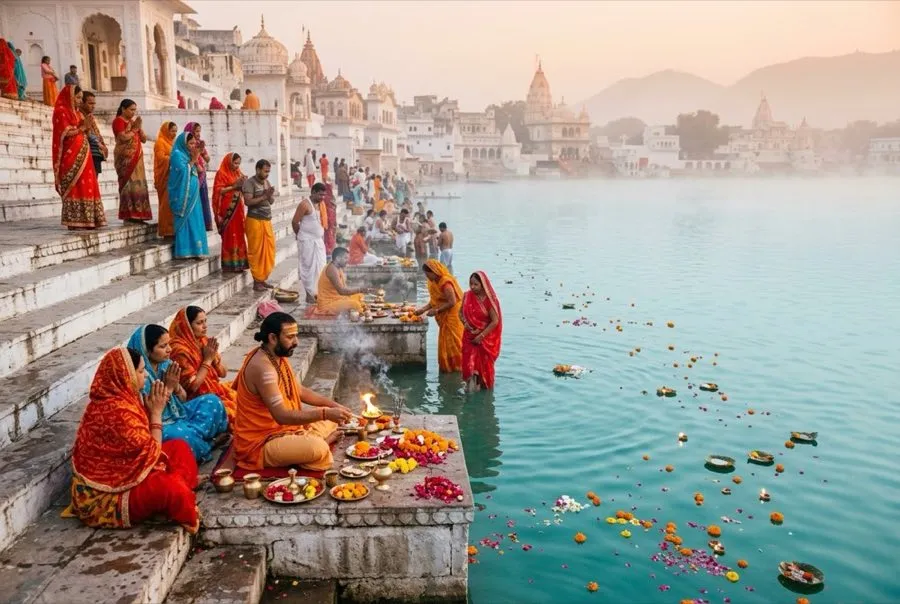
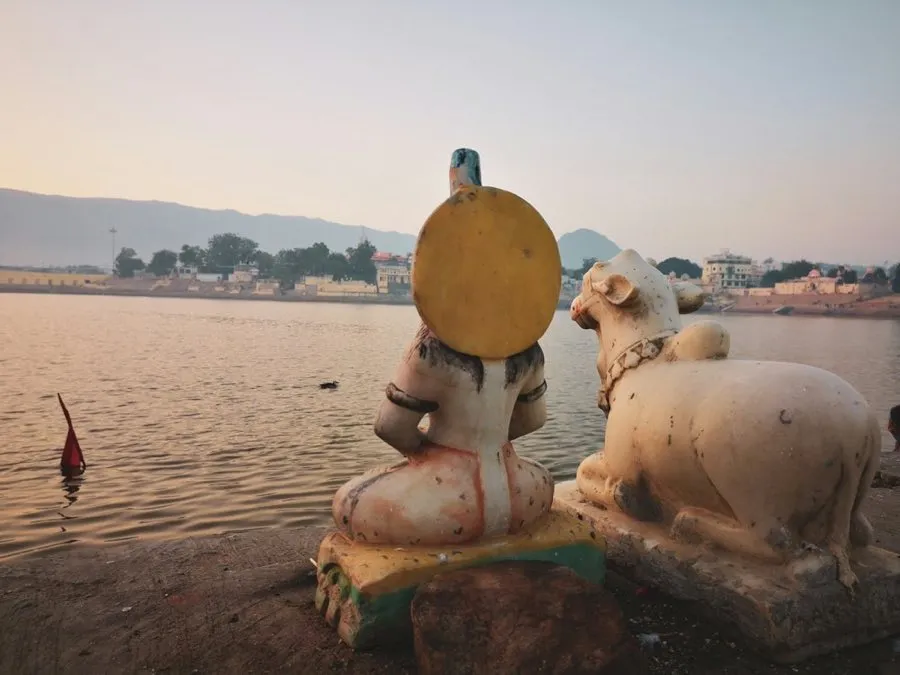
Pushkar is one of the most sacred tirthas (pilgrimage sites) in Hinduism. The holy Pushkar Lake — surrounded by 52 ghats — is considered by ancient texts (the Padma Purana and Brahma Purana) to be a direct gateway to liberation (moksha). Performing rituals here is believed to yield spiritual merit far greater than at most other sites in India.
Pilgrims visit from across the country and the world to perform ancestral rites, seek relief from planetary afflictions, and participate in the powerful daily aartis conducted by generations of Pushkari Brahmins — the traditional priestly families who have served these ghats for centuries.
"Pushkar is the only place on Earth where Lord Brahma is actively worshipped, and every ritual performed here carries the blessing of the creator himself."
Before you begin, note that all rituals require a certified Pushkari pandit who can guide you through the proper Vedic procedures. Costs vary depending on the complexity and materials required.
Daily Aarti Schedule
The ghats of Pushkar Lake come alive twice a day with the sacred ceremony of aarti — the waving of oil lamps accompanied by Vedic chants, ringing bells, and shankha (conch) blowing. The main aartis are held at Brahma Ghat and Varah Ghat, though smaller ceremonies occur at other ghats.
5:30 – 6:00 AM — The pre-dawn awakening ceremony. Priests chant Vedic hymns as the sun rises over the Aravalli hills. The lake is serenely lit by oil lamps. Best experience: Varah Ghat.
6:30 – 7:30 PM (seasonal) — The spectacular evening lamp ceremony. Hundreds of diyas float on the lake. Brahma Ghat is the primary location. Most crowded and atmospheric time.
Visitors are welcome to observe or participate. Purchase a small basket with flower petals, incense, and a clay lamp (₹50–100) from vendors at the ghat. Remove shoes before approaching the water's edge. Be mindful of photography restrictions — see our ghat photography guide.
Place a clay lamp with a flower on the lake surface while making a wish. This is the most intimate way to participate.
After aarti, priests distribute blessed prasad (sacred sweets and flower petals). Accept with both hands cupped.
Visit the main priest after aarti for a forehead tilak (sandalwood paste) and personal blessing. A small donation (₹10–50) is customary.
Holy Dip — Pushkar Snan
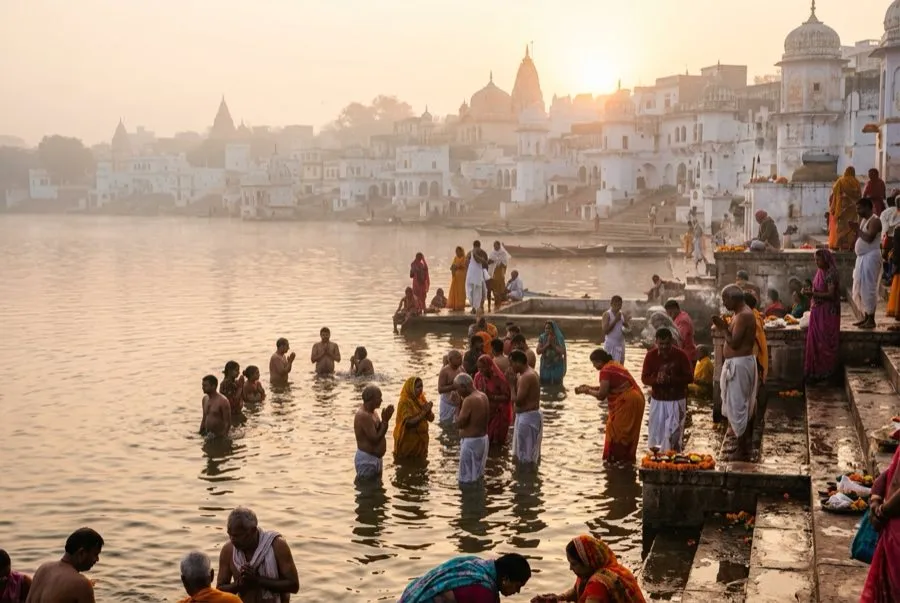
The ritual bath (snan) in Pushkar Lake is the most fundamental and powerful act of pilgrimage. Ancient scriptures state that a single dip in Pushkar Lake during the Hindu month of Kartik (October–November) washes away all sins and grants liberation to seven generations of ancestors.
Designated bathing areas exist at Brahma Ghat, Varah Ghat, and Gau Ghat. Pilgrims enter the water facing east, chant the Gayatri Mantra, and submerge themselves three times. After the dip, offering water to the Sun (Arghya) and circumambulating the sacred Peepal tree closes the ritual.
Bring a change of clothes. Changing rooms and lockers are available at the main ghats for ₹10–20. The water level is shallow (waist-deep) and steps are well-maintained. Avoid washing with soap — this is prohibited by the Pushkar Municipal Board to keep the lake sacred and clean.
Pitra Dosh Nivaran Pooja
Pitra Dosh is a ancestral affliction in Vedic astrology that occurs when departed ancestors are not at peace, often due to an unnatural death, unfulfilled desires, or improper funeral rites. This dosh is believed to manifest as recurring obstacles — delays in marriage, financial stagnation, health issues, or difficulty conceiving children.
Pushkar is considered one of the most powerful places in India to perform Pitra Dosh Nivaran because the lake's sacred waters are believed to directly reach the departed souls (Pitras). The ritual involves:
- Tarpan — offering water mixed with black sesame seeds, barley, and Kusha grass
- Pind Daan — offering rice balls to ancestors
- Pitri Mantra Japa — chanting of ancestral verses by the pandit
- Anna Daan — food donation to Brahmins and the poor
Duration: 2–3 hours | Cost: ₹1,100 – ₹5,100 depending on materials and number of pandits
Recommended Pandit: Any certified Pushkari Brahmin at Brahma Ghat or Gau Ghat can perform this. Expect a certificate of completion (pooja receipt) with a stamp.
Kumbh Vivah (Mangalik Marriage)
In Vedic astrology, individuals with Mangal Dosha (also known as Kuja Dosha) in their birth chart may face delays or challenges in marriage. Kumbh Vivah is a unique ritual where the person is "married" to a sacred pot (kalash) or a Peepal tree — thereby neutralising the malefic effects of Mars before they enter a human marriage.
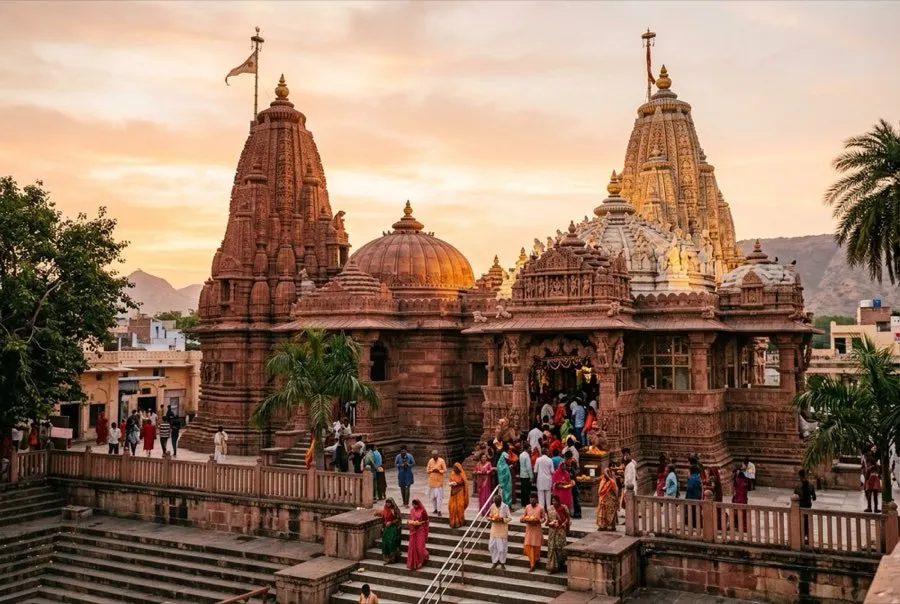
Pushkar holds special significance for this ritual because the presence of Lord Brahma — the god of creation and marriage — adds immense sanctity. Many families specifically travel to Pushkar from across India for Kumbh Vivah.
Duration: 1–2 hours | Cost: ₹2,100 – ₹5,100
Includes: Saptapadi (seven steps around the holy fire), mangal sutra tying to the kalash, donation to Brahmins, and a Vedic certificate.
Pind Daan & Shraddha
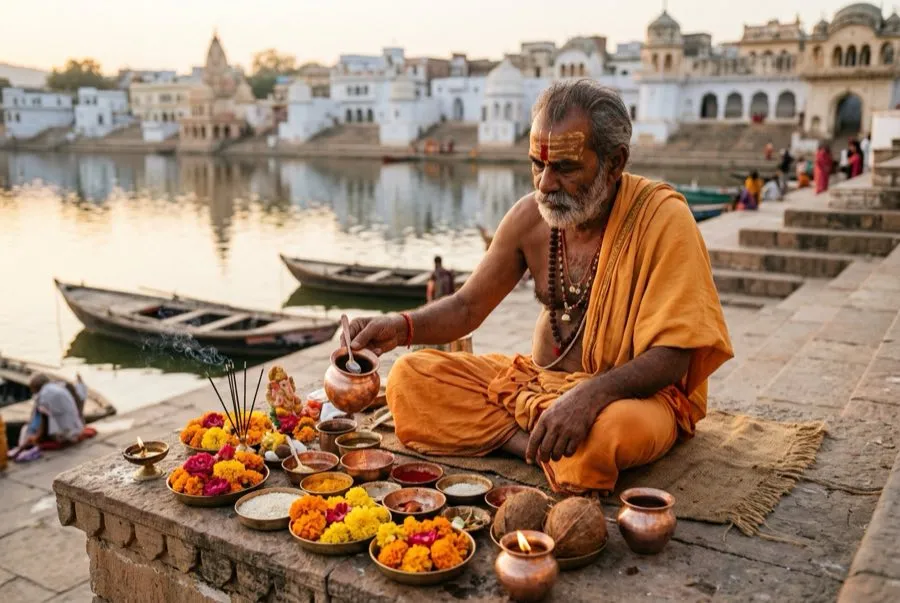
Pind Daan is the ritual offering of rice balls (pindas) to deceased ancestors. Combined with Shraddha (a ceremony performed on the death anniversary as per the Hindu calendar), these rites ensure the soul's journey toward peace and eventual liberation.
Pushkar is especially significant for Pind Daan because:
- It is one of the 12 major Maha Tirthas for performing ancestral rites
- It is a prescribed alternative to Gaya (Bihar) for those who cannot travel there
- It is the first Kumbh destination on the traditional pilgrimage circuit
Best Time: Pitru Paksha (fortnight of ancestors — September/October), Amavasya (new moon), or any Saturday | Cost: ₹1,100 – ₹3,100
Tripindi Shraddha
Tripindi Shraddha is a specialised ancestral rite performed for ancestors who died an unnatural or premature death — accidents, suicide, murder, or childbirth. Unlike regular Shraddha which honours departed souls, Tripindi is specifically for unfinished karmic transitions.
The name comes from Tri-pindi — three rice balls — representing the three preceding generations of the paternal lineage (father, grandfather, great-grandfather). The ritual is typically performed:
- On the shores of Pushkar Lake at Gau Ghat or Saptsarovar Ghat
- In the presence of three Brahmins (representing the three generations)
- With specific Vedic mantras from the Garuda Purana
Duration: 3–4 hours | Cost: ₹3,100 – ₹7,100
Kartik Poornima special: Performing Tripindi during the full moon of Kartik is considered infinitely more meritorious than at any other time.
Nagbali Pooja
Nagbali (literally "serpent offering") is an ancient Vedic ritual to seek forgiveness for the sin of killing a snake — or by extension, for any accidental killing of a living being. In Hindu belief, the serpent is a sacred creature associated with Lord Shiva, and harming one is believed to bring Sarpa Dosha which can cause skin diseases, financial troubles, and childlessness.
Nagbali involves:
- Clay idol making — a snake figurine is fashioned from sacred clay
- Infusing life (prana pratishtha) into the idol through Vedic chants
- Fire offerings (homa) with specific woods and ghee
- Releasing the clay snake into the lake as a symbolic offering
This rare ritual is performed at specific ghats known for Sarpa Dosha remedies, including Nagal Ghat and Rudra Ghat. It is one of the more elaborate and expensive rituals in Pushkar.
Duration: Half-day | Cost: ₹5,100 – ₹11,000
Rudra Abhishekam
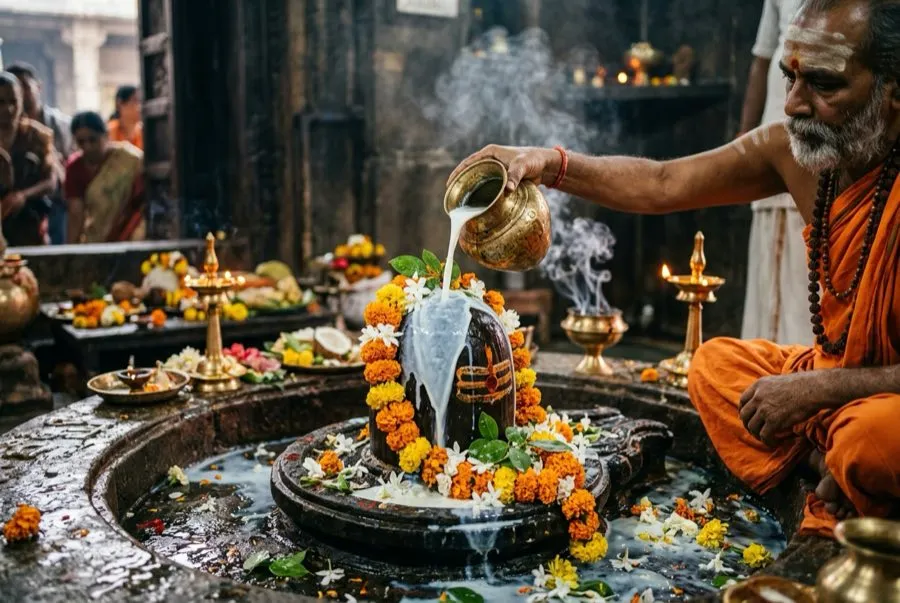
Rudra Abhishekam is a powerful Lord Shiva ritual involving the bathing of a Shiva Linga with sacred substances — milk, curd, honey, ghee, sugar, and water from Pushkar Lake — while the Rudram (a Vedic hymn from the Yajur Veda) is chanted. Each substance represents a different blessing:
Purification, longevity, peace of mind
Sweetness in speech, harmony in relationships
Victory, removal of obstacles
Where: Shiva temples at Varah Ghat, Rudra Ghat, or the main Brahma Temple complex | Cost: ₹1,100 – ₹3,100
Mondays are considered especially auspicious for Rudra Abhishekam. Priests recommend performing this ritual on a regular basis (especially during the month of Shravan — July/August) for maximum spiritual benefit.
Grah Shanti & Navagraha Pooja
Grah Shanti rituals are designed to pacify malefic planetary influences identified in one's birth chart (kundli). Pushkar's ghats host dedicated Navagraha Poojas where the nine planetary deities are invoked and appeased through:
- Mantra chanting for each of the nine celestial bodies (Surya, Chandra, Mangal, Budha, Guru, Shukra, Shani, Rahu, Ketu)
- Offering of specific coloured cloths, grains, and gemstones associated with each planet
- Havan (sacred fire ceremony) with planetary woods and herbs
Commonly Performed For: Shani Dosha (Saturn affliction), Rahu-Ketu transit issues, weak Jupiter (Guru) for education and career, and general planetary peace for newlyweds.
Duration: 2–3 hours | Cost: ₹2,100 – ₹6,100 depending on the number of planets being addressed
Finding a Certified Pandit
Not all priests at the Pushkar ghats are equal. Here is how to ensure you get an authentic, certified Pushkari Brahmin:
- Look for the ID Card: The Pushkar Brahmin Samiti issues official credentials. Ask to see it before agreeing to a pooja.
- Government-Recognised Centres: The Rajasthan Government runs a Pushkar Ghat Development Committee counter near Brahma Ghat where you can book certified pandits at fixed rates.
- Ask at Your Hotel: Most guesthouses in Pushkar have long-standing relationships with trusted pandits and can arrange the entire pooja for you.
- Beware of Touts: Some self-appointed "priests" may approach tourists near the main ghats. Always verify credentials and agree on a price before the ritual begins.
Pandit fees are usually ₹500–1,000 for simple rituals. Material costs (flowers, ghee, lamps, coconuts) are charged separately. Always get a printed receipt.
All major rituals come with a formal pooja certificate signed by the pandit and often stamped by the ghat committee. Keep it for your records.